Meal Prep for Beginners:
A Complete Weekly Guide
Meaningful Diet Editorial
February 19, 2026 · 10 min read
Meal prep is the single most effective habit for eating well consistently. It eliminates the daily "what should I eat?" decision fatigue that leads most people toward takeout, fast food, and ultra-processed convenience foods. This guide will walk you through everything you need to start, from equipment to recipes to a step-by-step Sunday prep routine.
Why Meal Prep Changes Everything
Research from the International Journal of Behavioral Nutrition and Physical Activity found that people who spend more time on food preparation at home eat significantly healthier, consuming more fruits, vegetables, and whole grains, with lower intake of ultra-processed foods. The biggest barrier to healthy eating isn't knowledge or motivation, it's time. Meal prep solves that by front-loading 2 hours on Sunday to save 5–7 hours of cooking and decision-making throughout the week.
Essential Equipment
You don't need a commercial kitchen. Here are the essentials:
- Glass meal prep containers (set of 10–12). BPA-free, microwave-safe, and they don't absorb odors
- Two large sheet pans, the secret to batch-roasting proteins and vegetables simultaneously
- A sharp chef's knife and large cutting board, chopping speed is the bottleneck for most home cooks
- A rice cooker or Instant Pot, set it and forget it while you work on other tasks
- Mason jars, perfect for salads, overnight oats, and dressings
The Meaningful Meal Prep Formula
Every meal should contain three components for optimal nutrition and satiety. This formula is rooted in the protein leverage hypothesis, ensuring adequate protein prevents the compensation overeating that derails most diets:
- Protein (palm-sized portion): Grilled chicken thighs, baked salmon, hard-boiled eggs, ground turkey
- Complex carb (fist-sized portion): Brown rice, quinoa, sweet potatoes, roasted root vegetables
- Vegetables (half the plate): Roasted broccoli, steamed green beans, raw spinach, sautéed bell peppers
The Sunday Prep Routine (2 Hours)
Here's a step-by-step timeline for a full week's worth of lunches and dinners:
Hour 1: Batch Cook
- 0:00. Preheat oven to 425°F. Start rice cooker with 3 cups of brown rice or quinoa.
- 0:05. Season 2 lbs of chicken thighs with extra virgin olive oil, salt, pepper, garlic powder, and paprika. Place on sheet pan 1.
- 0:10. Chop 2 heads of broccoli, 3 bell peppers, 1 lb sweet potatoes into even pieces. Toss with olive oil and seasoning. Place on sheet pan 2.
- 0:15. Both sheet pans go in the oven. Chicken = 25 min, vegetables = 20 min.
- 0:20. While everything roasts, wash and prep raw ingredients: spinach, cherry tomatoes, cucumbers for salads.
- 0:40. Remove vegetables. Flip chicken if needed.
- 0:45. Hard-boil 10 eggs for grab-and-go snacks.
Hour 2: Assemble & Store
- 1:00. Let everything cool for 10 minutes (critical for food safety, never seal hot food in containers).
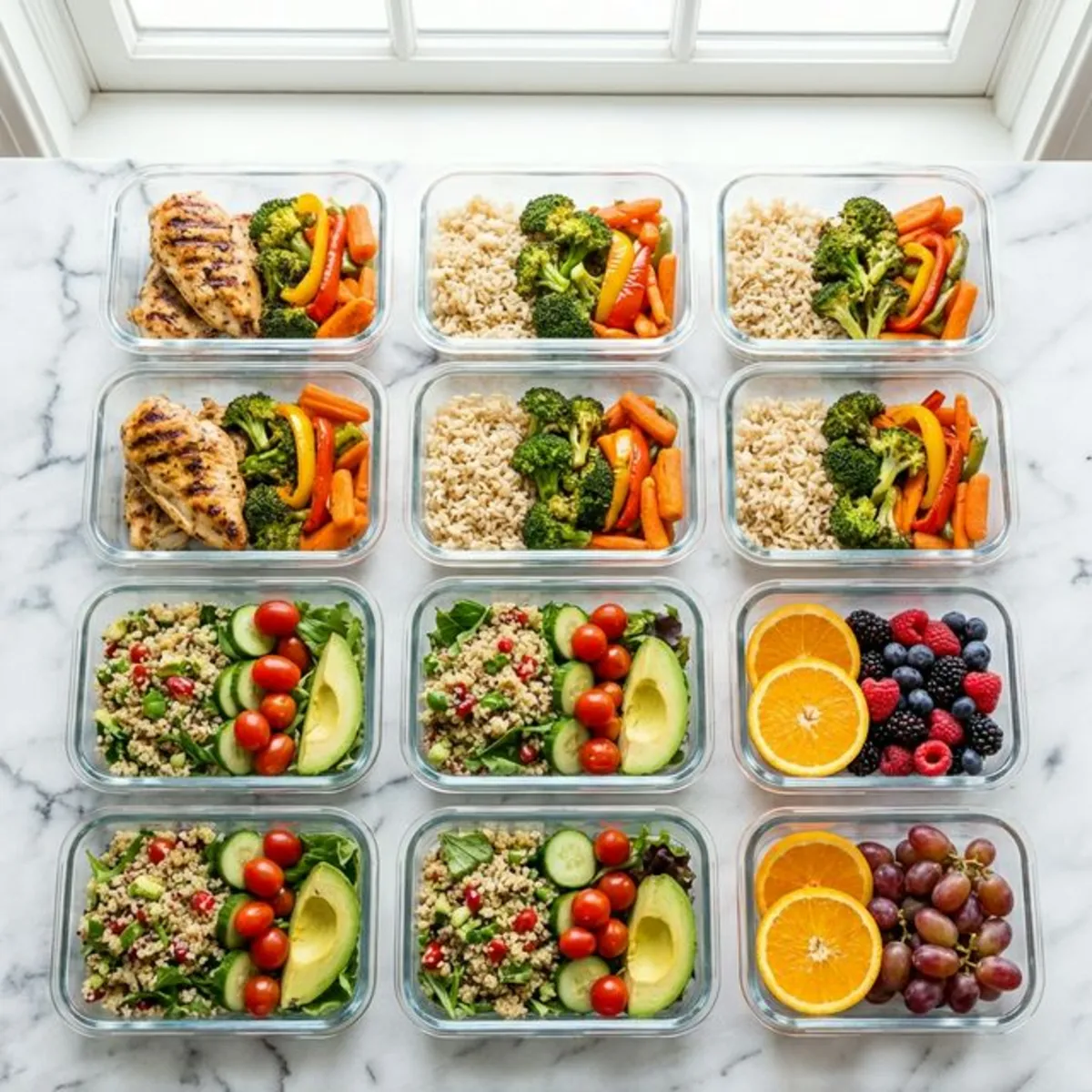
- 1:10. Assemble containers: protein + grain + vegetables. Vary the seasonings so meals don't taste identical.
- 1:30. Make 2 mason jar salads for lighter lunches. Dressing goes on the bottom, greens on top.
- 1:40. Portion out snacks: cut fruit, nuts, hard-boiled eggs.
- 1:50. Label containers with day of the week. Refrigerate meals for days 1–4, freeze days 5–7.
Ingredient Upgrades That Matter
The same meal prep routine becomes dramatically more nutritious with a few simple ingredient swaps:
- White rice → brown rice or quinoa (3× the fiber, complete protein)
- Canola oil → extra virgin olive oil (stable fats, anti-inflammatory polyphenols)
- Conventional seasoning blends → Celtic sea salt + individual spices (eliminates hidden additives)
- Store-bought dressings → homemade olive oil vinaigrette (removes seed oils)
Common Mistakes to Avoid
- Prepping too many recipes at once. Start with 2–3 meals total. Complexity kills consistency.
- Forgetting sauces and seasonings. Bland food doesn't get eaten. Prep 2–3 different sauces to rotate through the week.
- Not freezing enough. Days 5–7 meals should go straight to the freezer to maintain freshness and food safety.
- Using plastic containers. They warp, absorb flavors, and can leach chemicals when microwaved. Glass is the investment that pays for itself.
Over 10,000 swaps and counting
Upgrade your meal prep ingredients, free and instant.
Not sure what to swap in your meal prep? Our AI-powered Swap Tool finds the most nutrient-dense alternative for any ingredient. No account needed.
Use the Swap Tool →