The Seed Oil Dilemma:
What Science Actually Says
Meaningful Diet Editorial
February 5, 2026 · 8 min read
Seed oils are in almost everything, from “heart-healthy” salad dressings to your favorite granola bar. But over the last decade, a growing body of research (and some very vocal metabolic scientists) have started asking a difficult question: did we get this completely backwards?
TL;DR. The short version
- →Industrial seed oils (canola, soybean, corn, etc.) are extremely high in Omega-6 linoleic acid, which oxidizes easily when exposed to heat, light, and oxygen.
- →Oxidized fats create free radicals in your body, driving systemic, low-grade inflammation linked to metabolic disease and heart disease.
- →Ancestral fats, olive oil, avocado oil, ghee, and coconut oil, are chemically stable and have been part of human diets for millennia.
The Rise of Industrial Oils
For thousands of years, humans consumed fat from whole foods: olives, coconut, tallow, lard, and nuts. The concept of extracting oil from a corn kernel or a soybean didn't exist until the early 20th century, when industrial chemists figured out how to do it using high-heat processing and chemical solvents like hexane.
These oils were a revolution for food manufacturers. They were cheap, nearly flavorless, had a long shelf life, and could be used in nearly any application. Crisco replaced butter in American kitchens in the 1910s. Soybean oil became the world's most consumed culinary oil by the 1960s. The global food system was permanently altered.
What nobody stopped to ask was: what does this do to us over a lifetime of consumption?
20:1
Omega-6 to Omega-3 ratio in the average Western diet
Ideal ratio: ~1:1 to 4:1
63%
of all fatty acids in soybean oil are polyunsaturated (highly unstable)
vs. ~11% in butter
1910s
When industrial oil production began replacing animal fats at scale
Before: exclusively whole-food fats
The Core Problem: Oxidation and Instability
The most important chemistry lesson you'll ever get at the kitchen level: not all fats are created equal when it comes to heat stability. Polyunsaturated fatty acids (PUFAs), the primary fat in most seed oils, contain multiple double bonds in their molecular chain. That structural flexibility is exactly what makes them liquid at room temperature.
But those same double bonds are incredibly fragile. When exposed to heat (cooking), light (sitting in a clear bottle in the store), or oxygen (during the extraction process itself), those bonds break down. The fatty acids oxidize. And when you consume oxidized lipids, you are introducing reactive oxygen species, free radicals, directly into your bloodstream.
These rogue molecules damage cell membranes, oxidize LDL cholesterol (which is how it becomes dangerous), and provoke a systemic immune response. Over years of daily consumption, this is one of the primary drivers of the chronic, low-grade inflammation that underlies metabolic syndrome, type 2 diabetes, and cardiovascular disease.
“It's not just that seed oils lack nutrients. It's that their chemical structure is fundamentally unstable. We may quite literally be building our cell membranes out of fragile, oxidizing material.”
The Omega-6 Ratio Problem
Compounding the oxidation issue is a problem of ratio. Seed oils are almost pure Omega-6 fat, specifically linoleic acid. We need some Omega-6 to survive. Our inflammatory pathways absolutely require it for acute healing. But context matters enormously.
Anthropological and nutritional research suggests that throughout human evolution, we consumed Omega-6 and Omega-3 fats in a rough ratio of 1:1, perhaps up to 4:1 in some populations. Today, the standard American diet sits at an estimated 20:1 Omega-6 to Omega-3. In some studies, that number climbs to 25:1 or higher.
The problem is that Omega-6 and Omega-3s compete for the same metabolic enzymes. When Omega-6 dominates by this margin, it overwhelms the anti-inflammatory effects of the Omega-3s you are consuming, even if you eat salmon every day. Your body is left in a state of constant, smoldering immune alarm.
How to Spot the Culprits
Seed oils are the masters of disguise. They are listed under half a dozen different names and hide in products you'd never suspect. The next time you pick up a packaged food, scan the ingredient list for these names:
Canola Oil
Soybean Oil
Sunflower Oil
Safflower Oil
Corn Oil
Cottonseed Oil
Grapeseed Oil
Rice Bran Oil
You'll find these in salad dressings, mayonnaise, chips, crackers, tortillas, granola bars, oat milks, nut butters, roasted nuts, and nearly every restaurant kitchen in the world. The exposure is relentless if you're not looking for it.
The Meaningful Swaps: Returning to Ancestral Fats
Cutting out seed oils is one of the single highest-leverage diet changes you can make. Here's the good news: the alternatives are delicious, widely available, and have centuries of culinary tradition behind them.
1. Extra Virgin Olive Oil
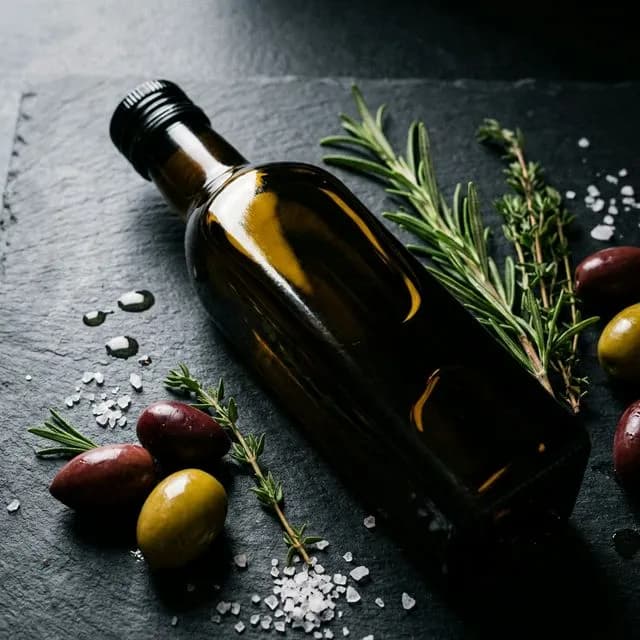
Rich in oleic acid, a highly stable monounsaturated fat, and overflowing with polyphenols like oleocanthal (which has documented anti-inflammatory properties similar to ibuprofen at culinary doses), EVOO is the gold standard. Use it liberally as a finishing oil and for low-to-medium heat cooking. The key: buy it in dark glass, check the harvest date, and use it within 6 to 12 months of pressing.
2. 100% Pure Avocado Oil
With a smoke point approaching 500°F, avocado oil is the ideal choice for high-heat cooking. It has a very similar fatty acid profile to olive oil (mostly monounsaturated oleic acid) but a neutral flavor that won't interfere with your food. Use it for roasting, searing, and as the base for homemade mayonnaise, one of the single easiest seed oil eliminations in any kitchen.
3. Grass-fed Butter & Ghee
Saturated animal fats have been unfairly vilified for over 50 years, based on research that has since been significantly revisited and challenged. Grass-fed butter is exceptionally stable under heat, rich in fat-soluble vitamins A, D, and K2, and contains butyrate, a short-chain fatty acid that serves as the primary fuel for your gut lining's epithelial cells. Ghee (which removes the milk solids through clarification) has an even higher smoke point and an intensely rich, nutty flavor.
4. Coconut Oil
About 65% of coconut oil is Medium Chain Triglycerides (MCTs), which are metabolized by the liver as immediate fuel rather than being stored as body fat. It is extremely resistant to oxidation due to its high saturated fat content. Use it for baking or medium-heat cooking where a mild coconut flavor is welcome.
Ready to act on this?
Find out what's in your pantry, right now.
Use our free AI-powered Swap Tool to identify seed oils hiding in your favorite products and get immediate, healthier alternatives.
Use the Swap Tool →